
By HFI staff
Jerusalem feels different on Jerusalem Day. Israeli flags hang from balconies and storefronts across Jerusalem. Teenagers wrapped in blue and white move through the city center carrying drums, water bottles, and endless energy. At the same time, police barriers stand at major intersections, and security presence remains visible throughout the city. In Jerusalem, celebration and tension often exist side by side.
Jerusalem Day is not only commemorated here. It is experienced. To understand why, you have to step back into Jerusalem as it was in June 1967. The city was divided then. Concrete barriers and barbed wire cut through streets that today fill with tourists, students, families, and prayer. Jordanian soldiers controlled the Old City and eastern Jerusalem. Jewish access to the Western Wallhad been cut off for nearly nineteen years.
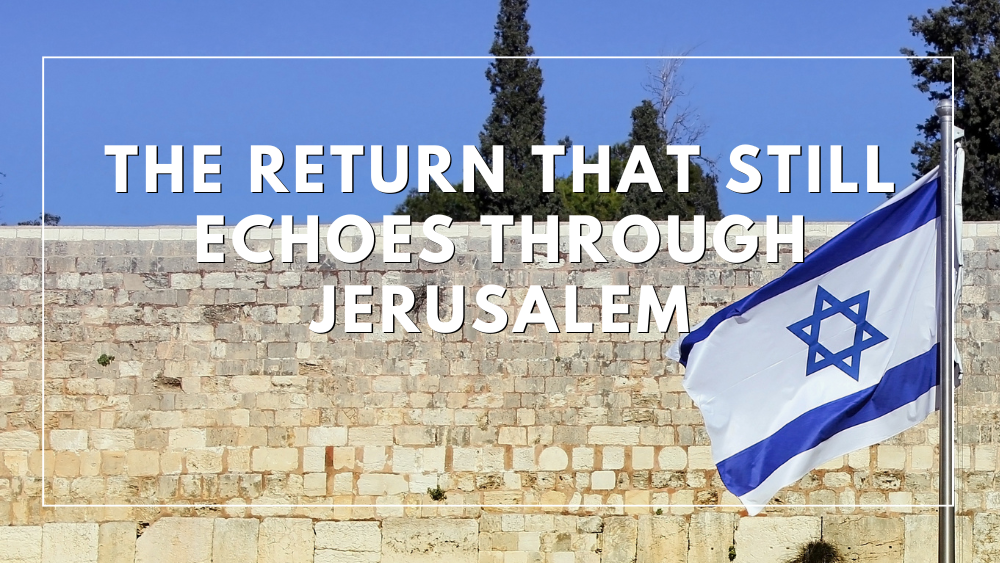
The Western Wall still stood, but for many Israelis and Jews around the world, it had become something unreachable. It was spoken about, prayed toward, remembered in songs and prayers, but inaccessible.
The war began in the early days of June 1967. Jerusalem filled with tension and uncertainty. Radios remained on constantly inside homes and cafés. Sandbags appeared along streets and windows. Soldiers moved through the city preparing for what many feared could become a battle for survival.
As fighting intensified, Israeli forces pushed toward Jerusalem’s eastern side. Gunfire echoed through the hills surrounding the city. Smoke rose above neighborhoods. Ammunition and military vehicles moved through narrow streets crowded with soldiers who understood the weight of where they were heading.
Eventually, the order came to move toward the Old City. Israeli paratroopers advanced through Lion’s Gate under heavy fire. The fighting was close and chaotic. Stone alleyways turned into battlegrounds. Soldiers moved carefully through ancient streets they had only known from stories, prayer books, photographs, and memory.
Suddenly, after generations of longing and nearly two decades of separation, they reached the Western Wall. Many of the soldiers were barely older than the teenagers now dancing through Jerusalem during Jerusalem Day celebrations. Some stood frozen in silence. Others pressed their hands against the ancient stone and began to cry, while rabbis blew shofars and soldiers prayed openly where Jews had been unable to stand since 1948.
The radio announcement spread across the country almost instantly: “The Temple Mount is in our hands.” For many Israelis, it did not feel like the capture of a city alone. It felt like a return.
The reunification of Jerusalem became etched into the national memory not only because of military victory, but because Jerusalem had never stopped living inside Jewish identity. For generations, Jews prayed toward this city from exile. They spoke about it at weddings, mourned its destruction on fast days, and ended Passover each year with the words, “Next year in Jerusalem.”
Jerusalem was open again. The memory of June 1967 still shapes the atmosphere of Jerusalem Day today. Beneath the flags, music, crowded streets, and celebrations is the memory of a city once divided and the moment it was brought back together.
Jerusalem has never been just a city within Israel. Decisions made here are discussed in Washington, debated in Europe, and watched closely across the Middle East. What happens in these streets rarely stays here.
In Jerusalem, prayer and tension often exist on the same street. Within a few minutes’ walk, you can move from celebration to silence, from worship to security checks, from ancient stones to modern conflict. It is a city where people pray toward the same place for completely different reasons, where history is not behind you but around you, and where faith, memory, conflict, and identity are constantly intertwined.
For believers, Jerusalem also carries clear biblical and prophetic significance. It is the city of David, a central setting throughout the biblical story, and the place toward which generations directed their prayers. It is inseparable from the life, death, and resurrection of the Messiah, and from the message that went out from Jerusalem to the nations.
That is part of why Jerusalem continues to hold such weight far beyond Israel itself.
This year, like much of life in Israel, Jerusalem Day is marked with both celebration and awareness. The streets fill, the flags move through the Old City, but the presence of security, the memory of recent months, and the uncertainty of what could come next are never far away.
Jerusalem Day is not only about remembering what happened in 1967. It is also about recognizing the reality of a city that continues to be lived in, built, prayed over, defended, and carried forward every single day.
People are still raising families here. They are still walking these streets, still praying at the Western Wall, and still carrying both the weight and the meaning of this city into their daily lives.
That is Jerusalem. It is not only remembered, but lived.