
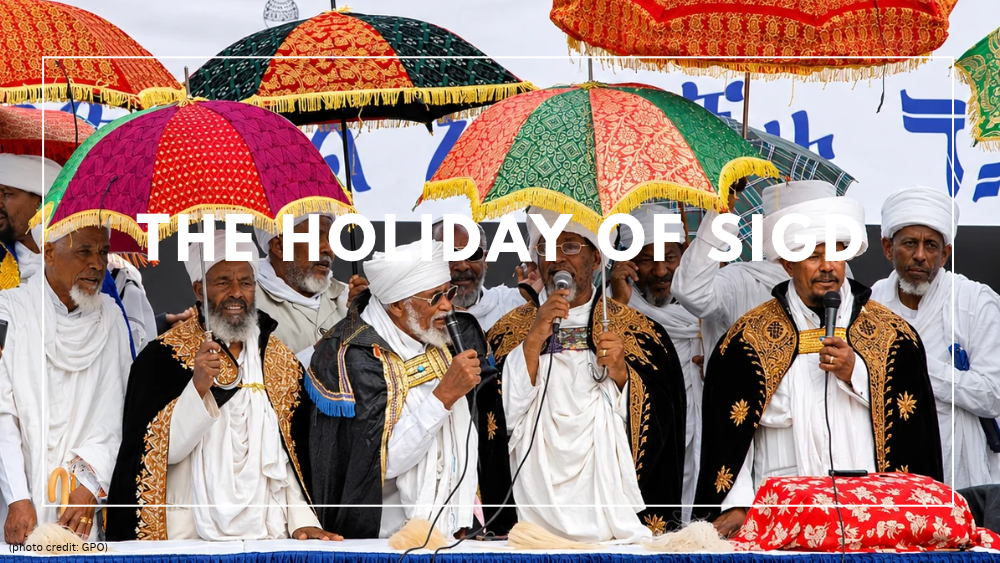
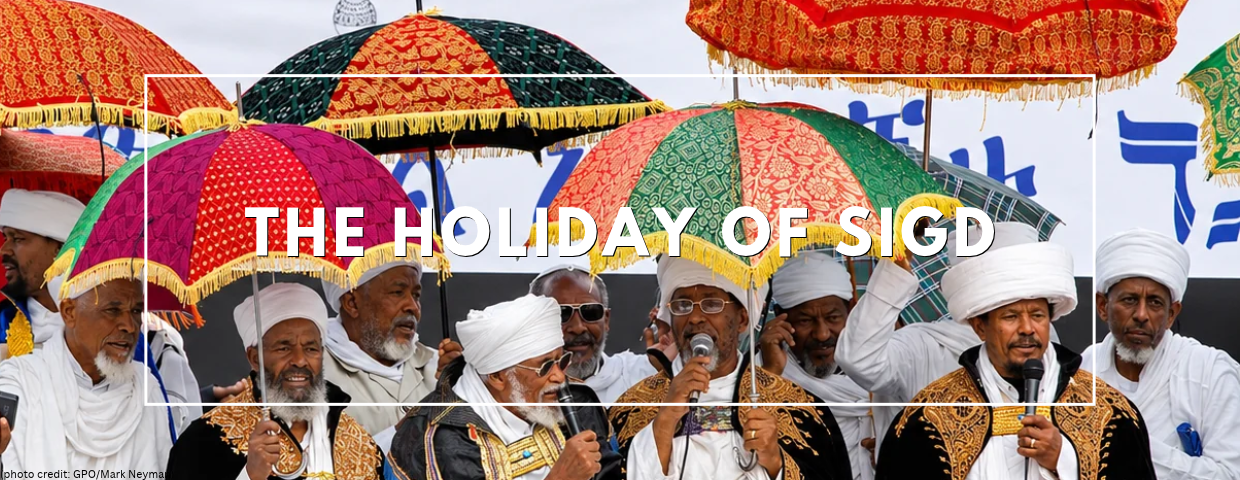
The holiday of Sigd is a beautiful expression of faith, humility, repentance, and the enduring hope of the Ethiopian Jewish community. For generations, Ethiopian Jews preserved their traditions, their commitment to God's Word, and their longing for Jerusalem, often while living in isolation from the wider Jewish world. Today, Sigd continues to be a meaningful celebration of their spiritual heritage and their connection to the Land of Israel.
The word Sigd comes from Ge'ez, the ancient Ethiopian liturgical language, and means "prostration" or "bowing down in worship." It is related to the Hebrew word segidah, which also expresses worship and prostration. For Ethiopian Jews, Sigd is a day of humility before God, repentance, renewal of the Covenant, and thanksgiving. It also reflects the remarkable perseverance of a community whose hope of returning to Jerusalem remained alive for centuries.
This year, Sigd begins at sundown on Sunday, November 8, and is celebrated on Monday, November 9, corresponding to the 29th of Cheshvan in the Hebrew calendar, 50 days after Yom Kippur.
The holiday of Sigd draws inspiration from the events described in the Book of Nehemiah. After the Jewish people returned from exile in Babylonia, they gathered in Jerusalem to hear the Torah read aloud. Ezra stood before the people, and as the Word of God was read and explained, the people responded with worship, repentance, and a renewed commitment to the Covenant.
Nehemiah 8:6 describes their response:
"Then Ezra blessed the LORD the great God. And all the people answered, 'Amen, Amen!' while lifting up their hands; then they bowed low and worshiped the LORD with their faces to the ground."
In Nehemiah 9, the people continued in fasting, confession, and worship, remembering God's faithfulness throughout their history and acknowledging their own failures. This extraordinary gathering became an important biblical model for Sigd. The people in Nehemiah's time were rebuilding their lives and Jerusalem after exile, while Ethiopian Jews, separated from their ancestral homeland for generations, saw their own spiritual longing reflected in that ancient story.
Just as the people of Israel gathered to renew their commitment to God and His Torah, the Ethiopian Jewish community continued to gather in faith, believing that their connection to Jerusalem and the promises of God had not been forgotten. For centuries, they maintained their religious identity despite considerable isolation, hardship, and persecution. They preserved their prayers, traditions, and devotion to Scripture, passing their faith from one generation to the next.
Traditionally, preparations for Sigd included prayer, fasting, and, in some communities, ritual bathing. Participants dressed in festive white clothing, symbolizing purity, and gathered under the leadership of their religious leaders, known as Kessim. In Ethiopia, the community would ascend a high mountain, symbolizing Mount Sinai, where the Israelites received the Torah. The physical ascent represented their desire to draw closer to God and renew their commitment to His instructions for life.
The Kessim led the gathering, carrying sacred scriptures and standing beneath colorful umbrellas. Passages from Scripture were read, including accounts of the giving of the Torah at Mount Sinai and the renewal of the Covenant between God and Israel. The congregation participated in prayer, repentance, and expressions of devotion to God, while remembering Jerusalem and praying for the day when they might return.
After the solemn prayers and ceremonies, the community descended from the mountain, and the atmosphere changed from reflection to joy. The fast was broken, and families gathered for festive meals, singing, dancing, and fellowship. Traditional foods, including injera, a fermented flatbread served with stews and other dishes, were shared as families celebrated together. This movement from repentance to rejoicing, from fasting to feasting, and from humility before God to the joy of celebrating together remains one of the most meaningful aspects of the holiday.
For generations, Ethiopian Jews prayed for a Jerusalem that many had never seen. They taught their children to love the Land of Israel and continued to believe that one day they would return. Their perseverance was rewarded when thousands were finally able to make their home in Israel, fulfilling a hope that had been passed down through generations.
In 1984–1985, Israel carried out Operation Moses, a secret rescue operation that brought approximately 7,000 Ethiopian Jews to Israel through Sudan. Many had endured a dangerous journey on foot from Ethiopia to refugee camps in Sudan, facing hunger, disease, and tremendous hardship. Tragically, thousands of Ethiopian Jews lost their lives during these journeys, never reaching the homeland they had longed to see.
Several years later, on May 24–25, 1991, during a period of political upheaval in Ethiopia, Israel carried out Operation Solomon, airlifting more than 14,000 Ethiopian Jews to Israel in approximately 36 hours. Together, these two remarkable operations helped fulfill the generations-long dream of thousands of Ethiopian Jews to return to the Land of Israel. Their significance becomes even more meaningful when viewed alongside the traditions of Sigd, as the prayers and longing of generations were answered through the return of so many to Jerusalem and their ancestral homeland.
Today, many Ethiopian Jews celebrate Sigd in Jerusalem, where the holiday continues to include fasting, prayer, public readings from Scripture, repentance, and joyful celebration. The central gathering takes place at the Armon Hanatziv promenade, overlooking Jerusalem. The prayers and ceremonies are followed by the breaking of the fast and celebrations with family and friends.
Although the physical return to Israel has become a reality for much of the Ethiopian Jewish community, Sigd continues to hold deep spiritual significance. It remains a day of covenant renewal, gratitude, remembrance, and commitment to God. In 2008, Sigd was officially recognized as an Israeli state holiday, providing an opportunity for Israelis from all backgrounds to learn about and participate in the rich traditions of Ethiopian Jewish heritage.
The spiritual pattern of Sigd offers meaningful lessons for all of us because it begins with humility, prayer, and confession. We acknowledge that we have fallen short and recognize our need to draw closer to God. The holiday reminds us of the importance of His Word and of renewing our commitment to live according to His instructions. It also teaches us that faith is not intended to be lived in isolation, as we are members of a larger community with responsibilities toward one another.
We share in one another's struggles, encourage one another through difficult seasons, and rejoice together when prayers are answered. One of the most remarkable lessons of Sigd is the importance of continuing to hope, even when the fulfillment of that hope seems far away. The Ethiopian Jewish community preserved its longing for Jerusalem across generations, maintaining its prayers, traditions, and commitment to its identity even when the possibility of returning seemed distant. Their faith and perseverance are a remarkable testimony to the importance of passing hope and commitment from one generation to the next.
I would also like to share something of my own journey to Ethiopia, which was, without a doubt, one of the most impactful and life-changing trips I have ever taken. The hospitality and joy we experienced were without restraint, and we were welcomed into people's homes, some with dirt floors, where we were treated to festive meals and delicious coffee. We prayed with the community in a synagogue with a tin roof and blankets for walls, and we experienced a warmth and generosity that left a lasting impression.
Many of the people we met already spoke Hebrew, in addition to Amharic and English, and were delighted to engage with us. Although Ethiopia is a beautiful and green country, the longing of these people to come to Jerusalem was palpable. What remained with me was not simply the beauty of the country or the warmth of the hospitality, but the strength of a community that continued to hold on to its faith and its hope for the future.
Their love for Jerusalem was not merely an expression of cultural identity, but something they carried in their hearts, taught their children, and expressed through their prayers. This experience gave me a deeper appreciation for the meaning of Sigd and for the generations of Ethiopian Jews who preserved this extraordinary heritage.
As we approach Sigd, we continue to pray that those within the Ethiopian Jewish community who still long to make their home in Israel will have the opportunity to do so. We also pray that those who have already returned will experience a genuine sense of belonging, acceptance, and opportunity in Israeli society.
The responsibility to welcome and embrace one another belongs to all of us, including our own believing communities. The rich heritage of Ethiopian Jewry is part of the greater story of the Jewish people, and it deserves to be honored, preserved, and passed on to future generations. As we celebrate the fulfillment of the hopes of so many Ethiopian Jewish families, we must also remember those who continue to face challenges and recognize our responsibility to support and encourage them.
May the upcoming holiday of Sigd be celebrated with tremendous joy, and may its lessons remain relevant for all of us. May we approach God with humility, remembering that even the wisest among us possesses only partial knowledge, and may we remain faithful to His Word even when the path before us seems uncertain.
May we teach our children the importance of faith, perseverance, and belonging to a community, recognizing our responsibility toward one another and appreciating the remarkable diversity of traditions and experiences that enrich the people of Israel. As we remember the generations who continued to pray for Jerusalem, may we be encouraged to persevere in our own faith and to trust that God's faithfulness is greater than the obstacles we face.
We wish a joyful and meaningful Sigd to all who are celebrating this special holiday.