
By Moran Rosenblit
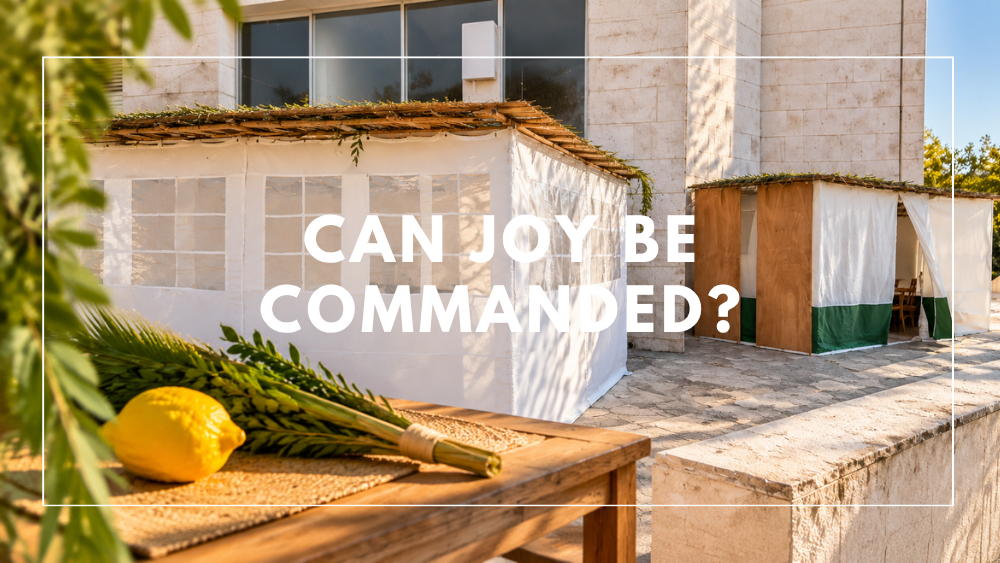
In the days leading up to Sukkot, as I walk through the streets of Jerusalem, I see something that happens every year. Small stands begin appearing throughout the city where people come to carefully choose the Four Species: the lulav, which is the palm branch; the hadas, which is the myrtle; the aravah, which is the willow; and the etrog, which is the citron.
People take this very seriously. They examine the etrogim, look carefully at the branches, and choose the ones they will take home and use during Sukkot. Then, throughout the feast, you will find the Four Species in sukkot across Israel as families recite the traditional blessings and wave them together.
This tradition comes from the Lord’s instruction to the children of Israel concerning Sukkot:
Now on the first day you shall take for yourselves the foliage of beautiful trees, palm branches and boughs of leafy trees and willows of the brook; and you shall rejoice before the LORD your God for seven days.
Leviticus 23:40
There is something in this verse that stands out to me. We often focus on what the children of Israel were commanded to take, but God’s instruction does not end with the branches. He immediately tells His people that they are to “rejoice before the LORD your God for seven days.” God was not merely giving Israel permission to rejoice during Sukkot. He was commanding His people to do so.
Sukkot is known as Zman Simchateinu, “the Season of Our Joy,” and joy is a very visible part of this appointed time here in Israel. Families gather together, people invite friends into their sukkot, meals are shared, children are everywhere, and throughout the week there is a very different atmosphere in the country.
The more I think about God’s command to rejoice, the more I realize that there is an important question behind it. How can God command someone to be joyful? We usually think of joy as something that comes because of our circumstances. We rejoice when we receive good news, when a prayer is answered, when our children are doing well, or when something for which we have waited finally happens.
However, what happens when we enter Sukkot carrying sorrow? What happens when there are unanswered prayers, disappointment, concern about someone we love, or uncertainty about what lies ahead? God did not command the children of Israel to rejoice only when everything was going well. He commanded them to “rejoice before the LORD.” Biblical joy, therefore, must be connected to something deeper than what is happening around us.
Scripture gives Sukkot another name that helps us understand this command. Sukkot is also called the Feast of Ingathering:
Also you shall observe the Feast of the Harvest of the first fruits of your labors from what you sow in the field; also the Feast of the Ingathering at the end of the year when you gather in the fruit of your labors from the field.
Exodus 23:16
Sukkot came at a time when the produce had been gathered from the fields. The people could look at what had come from their land and recognize what the Lord had given them. Deuteronomy connects this directly with joy:
You shall celebrate the Feast of Booths for seven days when you have gathered in from your threshing floor and your wine vat; and you shall rejoice in your feast.
Deuteronomy 16:13-14
The timing of this command is significant because the harvest had been gathered, and God told His people to stop and rejoice. There would always be more work to do. Another season would come, bringing more fields to prepare, more seed to plant, more responsibilities to carry, and more concerns about what the next year might bring. Yet God appointed a specific time for His people to stop and recognize what He had given them.
Life can become so filled with what needs to happen next that we fail to recognize what God has already done. We move from one responsibility to another, from one concern to the next, and sometimes from one prayer request to another without stopping to thank Him for what He has already given us.
However, this becomes much more difficult when our circumstances do not give us an obvious reason to rejoice. Many of us in Israel understand this very personally. The nightmare that began on October 7, 2023, on Shemini Atzeret and Simchat Torah, immediately following the seven days of Sukkot, added another painful layer to this appointed time for many Israelis. A day that should have been filled with celebration became associated with massacre, loss, war, and trauma.
There are families who enter these appointed times carrying grief because someone they love is no longer sitting at their table. There are wounded soldiers continuing long processes of recovery, and there are soldiers and reservists who have spent long periods away from their families. There are people who survived October 7 and the years of war that followed who continue to live with what they saw and experienced. There are families whose lives changed in a matter of minutes, and there are many people carrying wounds that cannot be seen from the outside. For some, even the sounds, crowds, celebrations, and gatherings normally associated with the holidays can be difficult because of the trauma they carry.
The Bible does not ask us to pretend that these things are not real. Biblical joy does not mean pretending that everything is fine when it is not, nor does it mean that there is no place for grief, tears, disappointment, or questions before the Lord.
God commanded His people to rejoice before Him, not because everything around them would always be good, but because He is good. Our circumstances may change, but the One before whom we rejoice does not change. We can miss someone deeply while still thanking God for those who are sitting around our table. We can carry unanswered questions while still recognizing His goodness. We can continue praying for something that has not yet happened while thanking Him for what He has already done.
There is another part of God’s instruction concerning Sukkot that is especially important. God did not simply command His people to rejoice. He also told them who was to rejoice with them:
And you shall rejoice in your feast, you and your son and your daughter, and your male and female slaves, and the Levite and the stranger and the orphan and the widow who are in your towns.”
Deuteronomy 16:14
I love what this reveals about the heart of God. His command included the children, the servants, the Levite, the stranger, the orphan, and the widow - those who could easily have been overlooked were specifically mentioned and included in the celebration.
The harvest had been gathered, and families were celebrating what they had received. Yet in the middle of their celebration, God directed their attention toward the people around them. The joy of Sukkot was never intended to stop with those who already had plenty.
This challenges us to look beyond our own sukkah and our own table. If God has blessed my table, I should think about someone whose table may not be as full. If my sukkah is filled with family and friends, I should consider someone who may otherwise spend the holiday alone. If God has given me more than I need, I should ask whether there is someone with whom I can share what He has placed in my hands.
There may be a family struggling financially, a new immigrant without extended family nearby, an elderly neighbor with no one to celebrate with, or someone carrying grief while everyone around them seems to be rejoicing. There may also be a soldier, survivor, or someone dealing with PTSD for whom a crowded sukkah, loud music, or simply being surrounded by people is difficult.
Not everyone who needs to be remembered will be able to join a large celebration. Sometimes making room for someone means understanding what that person is carrying and meeting them where they are. We may not be able to change their circumstances, but we can make sure they know they have not been forgotten.
After everything I have seen and experienced during these past years, and after witnessing so much pain among people I love and among our people as a whole, I have had to ask myself where my joy in the Lord is in the midst of it all. I cannot answer that question by pretending the pain is not there. I cannot erase what I have seen or forget the people we have lost. At the same time, I do not want to lose sight of the goodness and faithfulness of God.
I have had to remind myself that my joy in the Lord is not dependent upon everything around me being as I would like it to be. I can grieve while still being thankful. I can carry painful memories while still recognizing His goodness. I can bring unanswered questions before Him while still trusting that He is faithful.
Perhaps this is where the command to rejoice becomes much more than a command connected to a feast. It causes me to examine where I am looking for my joy and whether my joy in the Lord remains when the circumstances around me are painful.
As we enter Sukkot this year, we should ask ourselves whether we have become so focused on what we are still waiting for that we have stopped thanking God for what He has already done. We should consider whether our difficulties have caused us to overlook His goodness. And we should look around us and ask whether there is someone we can invite to our table, encourage, visit, help, or simply remind that they have not been forgotten.
When I walk through Jerusalem and see people choosing their lulavim and etrogim, I am reminded that God’s command concerning Sukkot did not end with taking the branches in our hands. He commanded us to rejoice before Him, and as we continue reading His instructions, we discover that this joy was never intended to be only about ourselves.
As we celebrate Sukkot this year, may we thank the Lord for His goodness even as we continue bringing our pain, needs, and concerns before Him. May we also look beyond ourselves and consider whom God has placed around us with whom we can share what He has given us.
May we learn anew what it means to “rejoice before the LORD your God for seven days.”
Hag Sukkot Sameach!