
Syria did not collapse in a single moment; it fractured until nothing remained to hold it together.
More than twenty-five million Syrians live within borders that once held one of the Middle East’s oldest and most complex societies. Sunni Arabs form the majority, alongside Alawites, Christians, Druze, Kurds, Armenians, Circassians, and others whose presence predates the modern Syrian state by centuries. Historically, Syria was never held together primarily by strong political institutions. It endured as a crossroads, shaped by cities, trade routes, and layered communal coexistence rather than centralized national authority.
Following independence from French rule in 1946, the country cycled through coups, ideological struggles, and competing visions of Arab nationalism. Governments rose and fell, yet society retained depth and cohesion. Damascus and Aleppo remained vibrant centers of commerce, learning, and culture. Communities endured even as power at the top remained unsettled.
That pluralism was steadily dismantled under authoritarian rule. First under former President Hafez al-Assad and later under his son Bashar, Syria was transformed into a security state defined by repression, sectarian favoritism, and fear. Civil society was crushed, political life frozen, and institutions hollowed out. At the same time, Syria became deeply embedded in the regional terror ecosystem, hosting and enabling terrorist organizations, facilitating weapons transfers, and serving as a central node for Iranian proxy warfare across the Middle East.
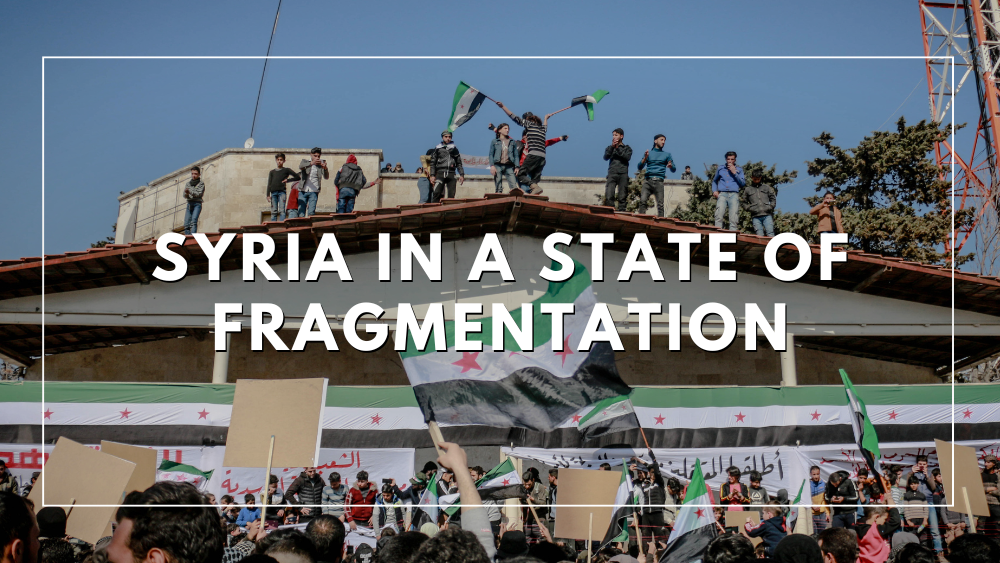
When protests erupted in 2011, they were met not with reform, but with overwhelming force. The regime responded by deploying its security services, army units, and intelligence apparatus against civilian populations. Entire neighborhoods were besieged, cities were shelled, and dissent was treated as an existential threat to be eliminated rather than a political challenge to be addressed. Mass arrests, torture, enforced disappearances, and the deliberate targeting of medical infrastructure became defining features of the conflict. The use of chemical weapons against civilian areas further signaled that the survival of the regime had taken precedence over the survival of society itself.
By 2024, years of mass repression, war crimes, economic ruin, and reliance on foreign-backed militias had destroyed the Syrian state. The Assad regime functioned as a coercive terror apparatus rather than a government. When rebel forces led by Ahmed al-Sharaa took Damascus, the regime collapsed outright, leaving no national structure capable of governing and a society already saturated with weapons, militias, and unresolved violence.
What followed was not peace. Authority dispersed away from institutions and into the hands of armed groups, jihadist factions, Iranian-backed militias, criminal networks, and local power brokers. Governance became fragmented and coercive, and Syria’s terror infrastructure persisted without effective control.
Power vacuums do not eliminate violent systems. They multiply them. Weapons trafficking accelerates in the absence of enforcement. Militias entrench themselves as de facto authorities. Extremist factions exploit civilian exhaustion to consolidate control. None of this requires permission from Damascus, and little of it can be meaningfully reversed by decree.
The human cost of that collapse fell with particular severity on minority communities. In southern Syria, Druze populations became the target of coordinated violence by militias operating in the absence of state authority. What unfolded was not random lawlessness but an effort to forcibly reshape the demographic and territorial landscape. Druze villages faced massacres, systematic intimidation, forced displacement, and the destruction of communal life, all aimed at removing their presence from strategically contested areas. These attacks bore the hallmarks of ethnic cleansing. Violence was used not only to kill, but to erase a community’s ability to remain where it had lived for generations.
At the same time, Syria has re-emerged as a fertile ground for terrorism. Jihadist remnants seek relevance. Iranian-backed militias probe for renewed access and infrastructure. Smuggling routes reopen. Terror networks require neither ideological alignment with Damascus nor centralized approval. They require only permissive terrain, porous borders, and a population too exhausted to resist. Syria today provides all three.
Syria’s tragedy is therefore not only political. It is social and generational. A society shaped by ancient cities and layered identities has been reduced to displacement, dependency, and fear. Children grow up without a memory of functioning institutions. Professionals flee or adapt to survival economies. The social fabric that once bound communities together continues to unravel.
As terrorist militias targeted Syrian Druze communities in a campaign of massacres and attempted ethnic cleansing, Israel responded by confronting the violence while defending its own border. From the Golan Heights, Israel acted to block armed groups from advancing, prevent terror forces from entrenching themselves near Israeli communities, and stop the spillover of mass violence. Israel’s actions were also shaped by deep ties to the Druze people, who are an integral part of Israeli society and national life. Defending the border and seeking to protect Syrian Druze civilians were therefore inseparable, reflecting a clear stance that terror would not be allowed to redraw the frontier through bloodshed or erase a community through violence.
Syria’s story is not finished, but it is unfinished in the most dangerous way. A people with deep history remain trapped between memory and uncertainty, while the absence of authority allows terror, ethnic violence, and proxy warfare to spread outward. In the Middle East, the fate of one broken state rarely belongs to it alone.