
It’s a quiet morning in Sderot, and a small café opens its doors again for the first time in months. The owner arrived early, unlocked the door, and stood for a moment before turning on the lights. Some of the windows were new, installed after damage from rocket fire. The furniture does not all match. A few tables have been loaned by neighbors whose own homes were still under repair. By late morning, a pair of soldiers stops in for coffee. A couple visiting from the Tel Aviv area asked how business was going. The café was not what it used to be, but it was open, and that mattered.
Since October 7 and more than two years of war that followed, evacuations, missile fire, and uncertainty, Israel has been reshaped by experience. Normal no longer means life without threat. It means life that continues despite it. It means rebuilding, even when the future is not fully clear.
Across the country, rebuilding is taking place quietly and steadily. Families displaced from border communities are returning home. Some unlock doors to houses still bearing signs of damage. Others step into neighborhoods that feel different after months away. Walls are repaired, gardens replanted, and furniture replaced. But the deeper work is internal. Parents help children feel safe again. Neighbors reconnect. Communities relearn how to live together after rupture.
Small businesses reflect this courage in daily ways. Restaurants reopen, knowing they must remain flexible. Owners adjust hours, simplify menus, and rebuild teams that were scattered by reserve duty or displacement. There is caution, but also resolve. Each reopened café and shop represents a decision to invest again in daily life.
Tourism tells a particularly hopeful story in this season of rebuilding. After collapsing almost overnight, the industry has begun to recover with care and intention. Hotels that housed evacuees for months are transitioning back to tourists, including major Jerusalem and Tel Aviv hotels that were contracted by the state to host displaced families from the Gaza envelope and northern communities throughout 2023 and 2024. Flights are gradually returning. Tour guides, many of whom spent extended periods serving on reserve duty, were often jobless. According to the Israel Tour Guides Association, thousands of licensed guides were left without income for months after October 7, or temporary alternative work before slowly resuming tours at the end of 2025. They are now making a gradual return to the road, leading smaller, more purposeful groups.
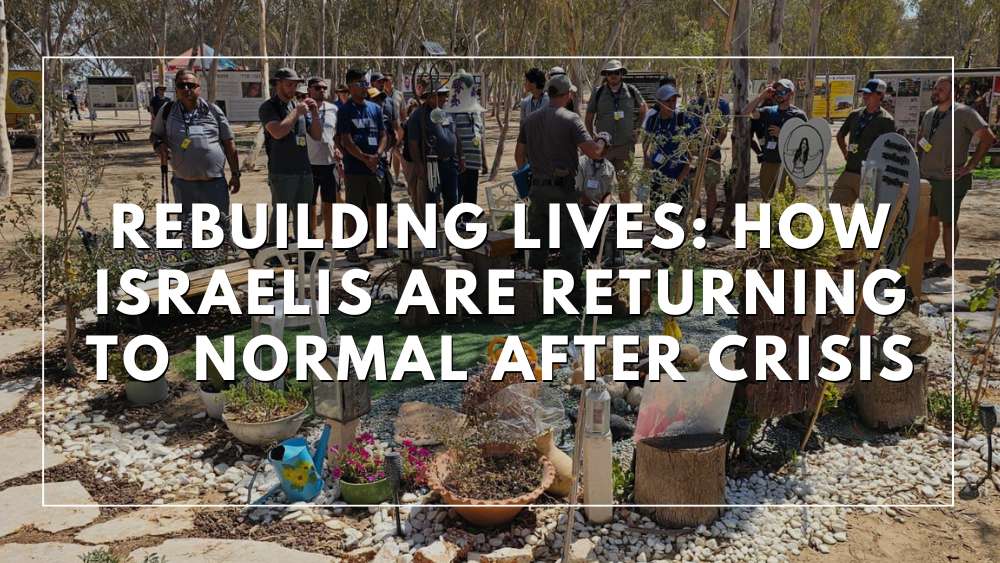
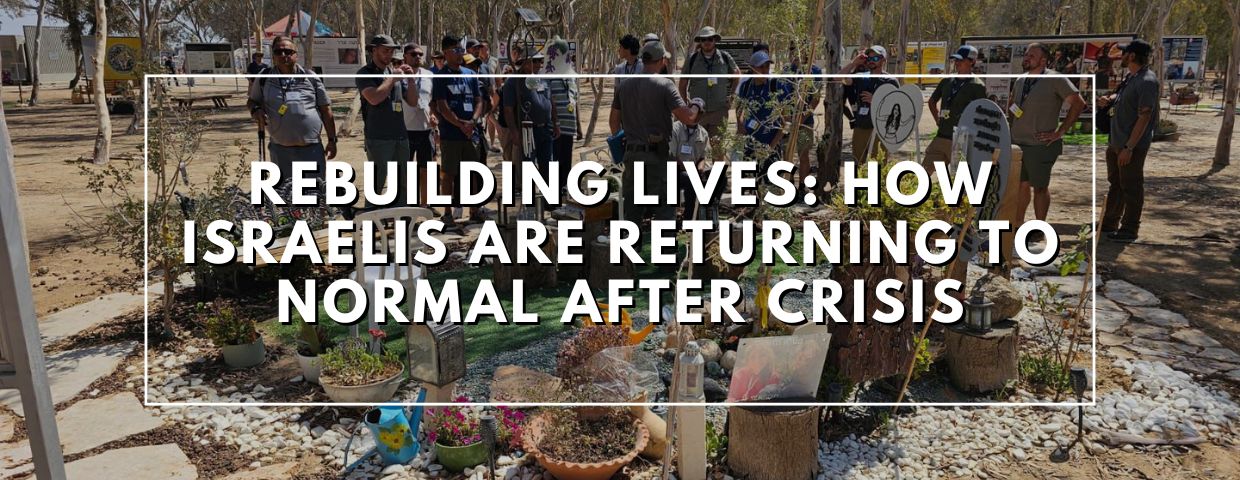
Increasingly, visitors are coming not only to see historic and biblical sites, but to stand in solidarity with the people of Israel. Many choose to visit communities directly affected by the war, to listen, to learn, and to show up simply by being present. Hosting in this season is no longer just about tourism. It is about connection, encouragement, and the quiet reassurance that Israel is not standing alone as it rebuilds.
At the national level, life has resumed its familiar patterns. Children go to school. Public transportation runs. Offices reopen. Reserve soldiers move between military duty and civilian life as needed. Parents prepare lunches knowing schedules could change, yet still plan for tomorrow. This balance between readiness and routine has become second nature.
Mental health professionals acknowledge the weight many carry. Fatigue and grief remain present. At the same time, they point to something enduring. Determination. Support networks have grown. Counseling services have expanded. Memorials stand alongside playgrounds, not as symbols of defeat, but as reminders of what has been endured and why rebuilding matters.
What defines this moment is not the absence of fear, but perspective shaped in the midst of real pain and loss. Israelis are not ignoring what they have lived through. Many carry grief, trauma, and uncertainty into their daily routines. They are choosing, even in the presence of that suffering, not to be ruled by it. Weddings are celebrated. Communities gather. Life moves forward with intention, even when hearts are still heavy.
Rebuilding in Israel today does not mean returning to the past. It means shaping a new routine with care and awareness. It is a routine built on flexibility, shared responsibility, and hope grounded in action.
In the space between crisis and calm, Israelis are doing what they have always done. They are repairing homes while carrying memories of what was lost. They are welcoming visitors not because everything feels resolved, but because connection itself brings strength. They choose life again and again, not because the pain has disappeared, but because life remains worth rebuilding.
One Comment on “Rebuilding Lives: How Israelis Are Returning to Normal After Crisis”
So glad to have stood with Israel and Hope 4 Israel from Australia for over ten years, so grateful for all your marvellous posts dear Moran to help us know how to pray; intercede, support in every small way we can.
I am a part of a number of zoom prayer groups who have prayed for the Lord’s Beloved Chosen People and the Land for many years here in the Ends of the Earth. So many ordinary Australians love Israel and stand with you, yet you only hear of the few who are deluded and misled. ISRAEL LIVES – AND MESSIAH YESHUA IS LORD!