
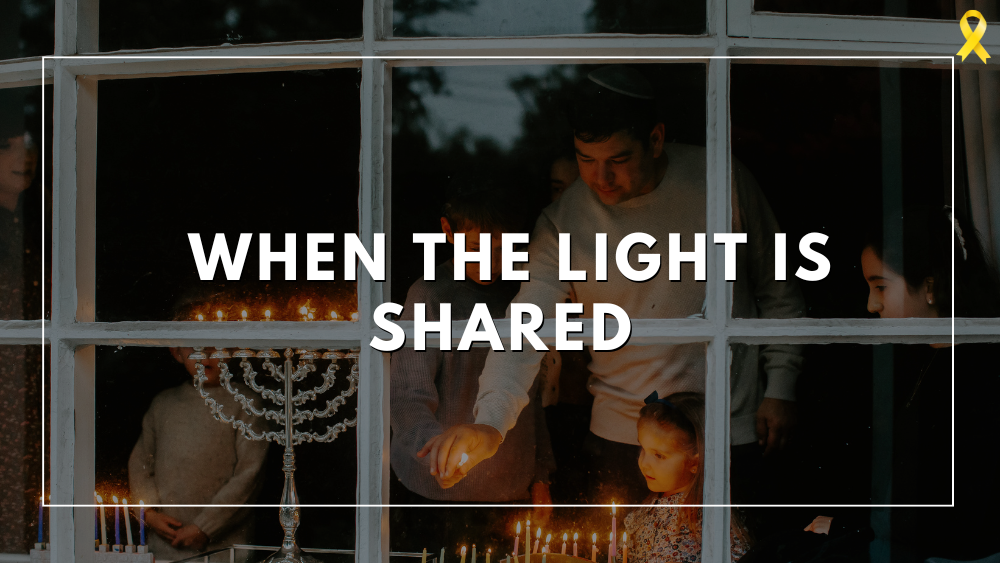
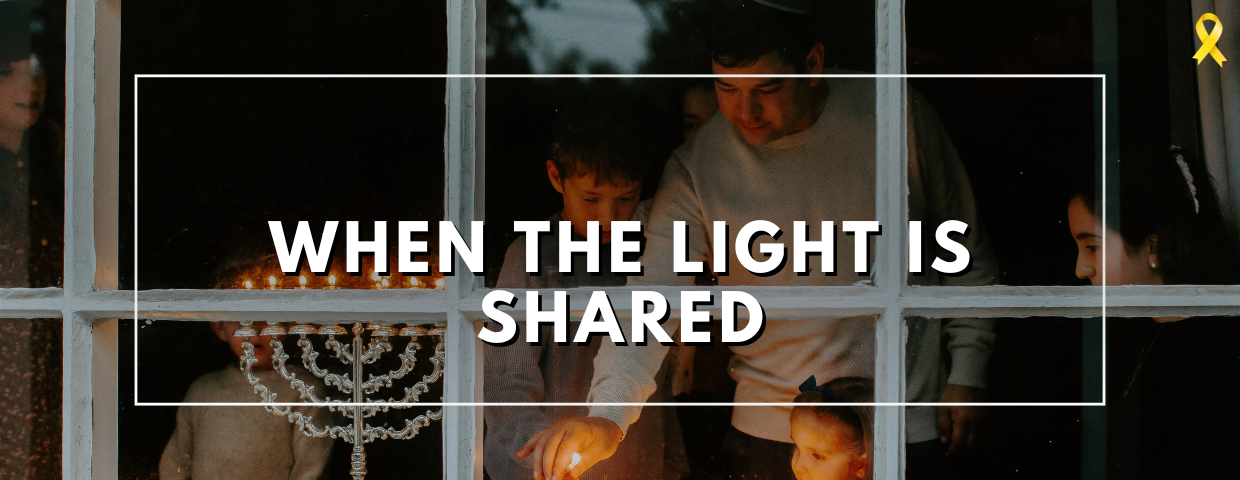
As Hanukkah arrives in Israel, it does not announce itself quietly. The streets glow earlier in the evening, windows begin to flicker with small flames from hanukkiahs, and the air fills with a familiar rhythm of movement and pause. Families gather in living rooms and on balconies. Teens circle up with their youth movements. Young athletes pause together before basketball or football (soccer) practice. In public squares, outside cafes, at community centers and schools, the same moment repeats itself in countless small variations. Life continues, but it slows just enough for people to arrive at the same moment together.
This is how Hanukkah is lived here. Not as a lesson, but as a shared rhythm woven into daily life. Just before a game, two competing teams stand at center court to light. Parents call children in from the street. Soldiers gather on base, shoulder to shoulder. The blessings are familiar, often sung aloud in unison. What matters is not precision, but participation.
The story behind the holiday is never far away, but it rarely needs to be explained. More than two thousand years after the rededication of the Second Temple, the act of holding fast to identity and purpose still feels immediate. Lighting one candle at a time, building toward fullness rather than rushing to it, mirrors how courage and unity take shape here. The shamash, the servant candle, moves from wick to wick, passing fire without diminishing its own flame, reminding everyone that light is meant to be shared, not guarded.
Food drifts naturally into these gatherings. The smell of frying oil moves through kitchens and hallways. Plates of latkes appear between conversations. Sufganiyot (jelly-filled doughnuts) are passed around at schools, offices, and youth meetings. These are not symbols that require explanation. They are familiar gestures that invite people to linger, to stay connected, to remain present a little longer than planned.
Children spin dreidels on the floor while adults talk nearby. Chocolate coins are exchanged, sometimes playfully, sometimes with intention. Learning happens through participation rather than instruction. Songs surface almost without prompting. One voice begins, others join in, and soon the room fills with words carried across years of shared memory. No one leads; everyone belongs.
This year, the light is not untouched by sorrow. We grieve with those murdered in Sydney who gathered to celebrate and light together. That awareness does not halt the ritual, but it deepens it. The act of lighting becomes not only continuity, but solidarity, a refusal to allow violence to fracture communal life. The flames burn with remembrance as much as resolve. As Israel celebrates Hanukkah this year, all of the living hostages are back home with their families, yet the story is far from complete. We continue to wait for Ran Gvili, the final Israeli hostage whose remains are still held by Hamas. Ran, a master sergeant in the Israeli police, was captured during the brutal Hamas massacre on October 7, 2023, and has remained in Gaza since that tragic day. His family’s unwavering fight for his return continues. As we light the candles, we not only rejoice in the homecoming of those freed, but we also hold onto the hope that Ran will soon join his loved ones.
So when the candles are lit this year, let them do more than mark the calendar. Let them interrupt the rush, however briefly. Step into the pause with others. Light, stand, sing, remember, even if only for a moment. Hanukkah asks for participation, not explanation. It calls people to choose presence over noise, unity over isolation, and shared light over retreat. In a world that often pulls people apart, the simple act of lighting together becomes a decision to show up, to belong, and to carry the flame forward side by side.
One Comment on “When the Light is Shared”
Your explanation of Hanukkah has helped me better understand what this celebration is about. I pray God continues to bless your ministry in Israel and around the world. Shalom, my brother.